

Are you curious about the vibrant and colorful Carnaval de Tilcara in Jujuy, Argentina? This traditional celebration is known for its lively music, intricate costumes, and cultural significance. In other words, it is a must-see event for anyone visiting the region.
In this blog post, we’ll explore three fascinating aspects of the Carnaval de Tilcara. Get ready to discover a unique and memorable experience!

What Is the Carnaval de Tilcara About?
Participants engage in rituals and ceremonies that honor and acknowledge the earth goddess, Pachamama. Locals seek her blessings for a bountiful harvest, prosperity, and well-being.
One common ritual during the carnival involves making offerings of food, coca leaves, and other symbolic items to the earth. These offerings are placed on ceremonial altars or buried as a gesture of gratitude to Pachamama for her abundance and generosity.
Additionally, music, dance, and other forms of artistic expression during the carnival may serve as offerings to Pachamama. Thus, celebrating the interconnectedness of humanity with the natural world and seeking harmony and balance in the universe.

3 Curiosities About the Carnaval
1. Historical Roots: The Carnaval de Tilcara has deep historical roots that date back centuries. Originating from pre-Hispanic traditions, the carnival is a blend of indigenous customs and Catholic influences brought by Spanish colonizers. It’s a celebration of cultural identity and heritage, reflecting the rich tapestry of Jujuy’s diverse population.
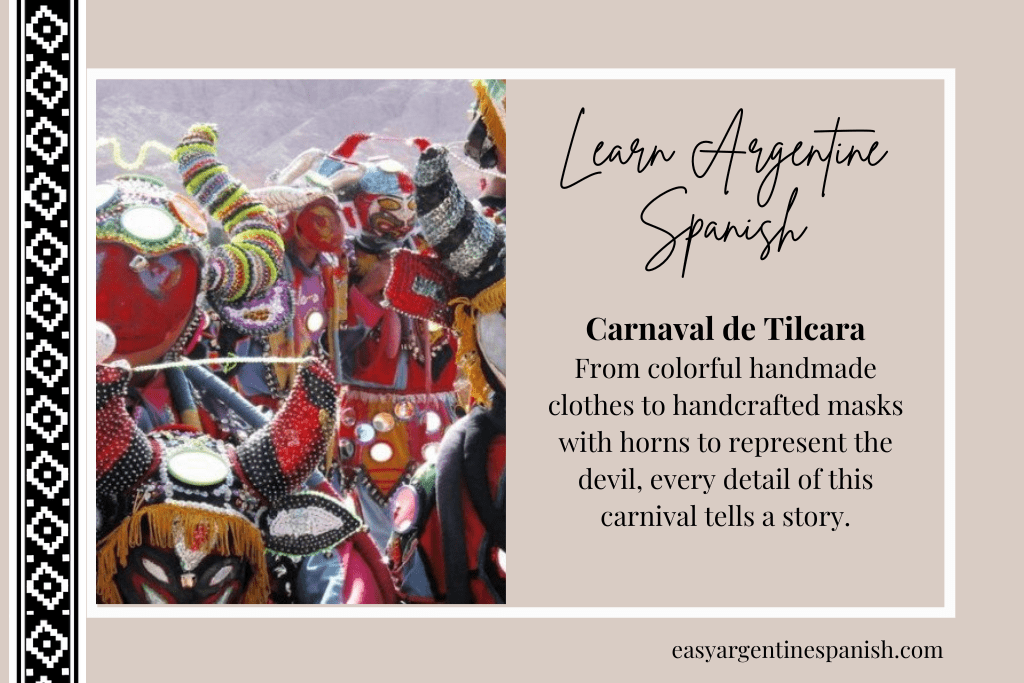
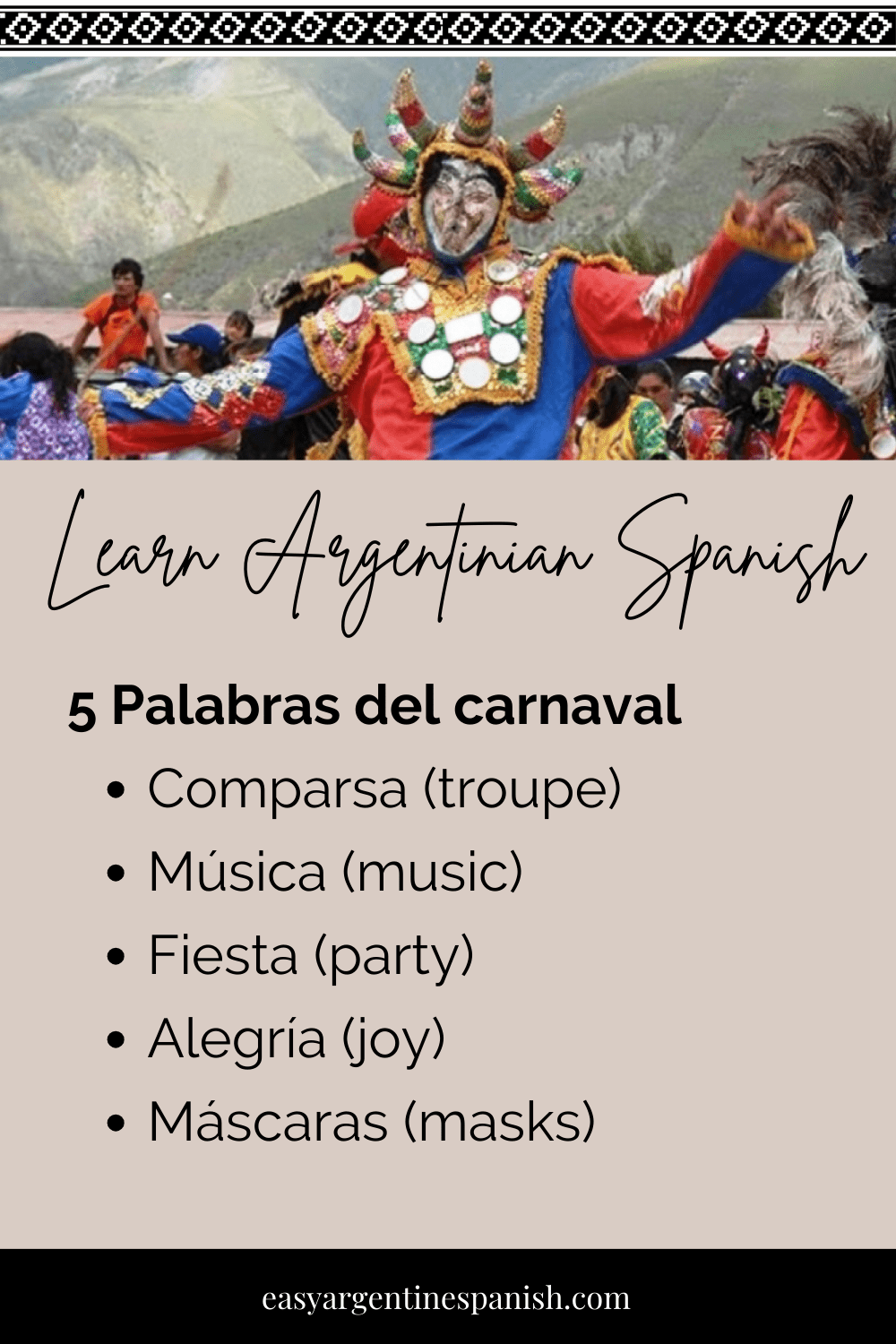
2. Colorful Costumes and Masks: One of the most captivating aspects of the Carnaval de Tilcara is the elaborate costumes and masks worn by participants. These vibrant ensembles are adorned with intricate designs, bright colors, and symbolic motifs that reflect the cultural heritage of the region. From colorful handmade clothes to handcrafted masks with horns to represent the devil, every detail tells a story and adds to the spectacle of the carnival.
3. Representations of the Devil: During the Carnaval de Tilcara, the devil is represented through elaborate masks, costumes, and performances. Locals engage in theatrical skits, dances, and processions that depict the struggle between good and evil, often culminating in the triumph of righteousness and harmony.
Conclusion
Now that you’ve learned about these fascinating curiosities of the Carnaval de Tilcara, why not immerse yourself further in the culture and language of Argentina? Subscribe below to learn more about the vibrant Argentina!